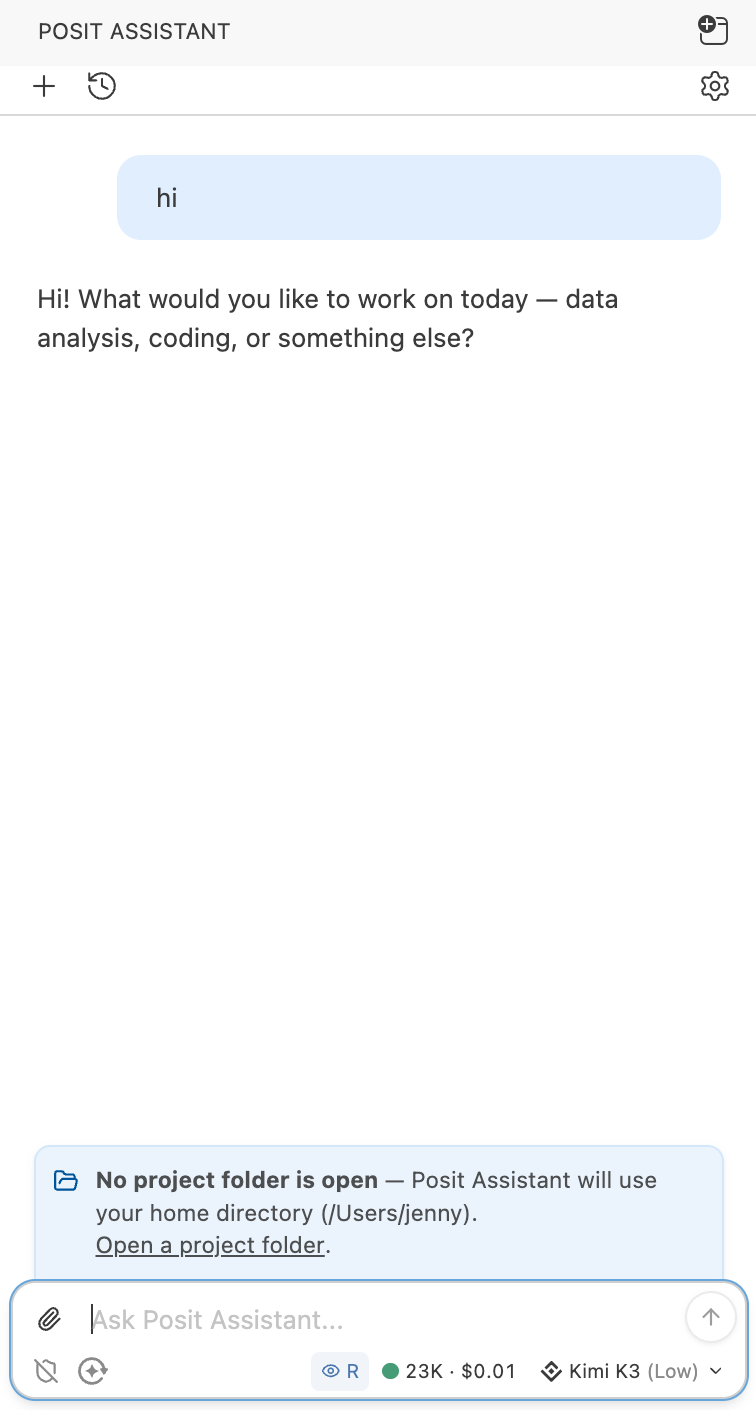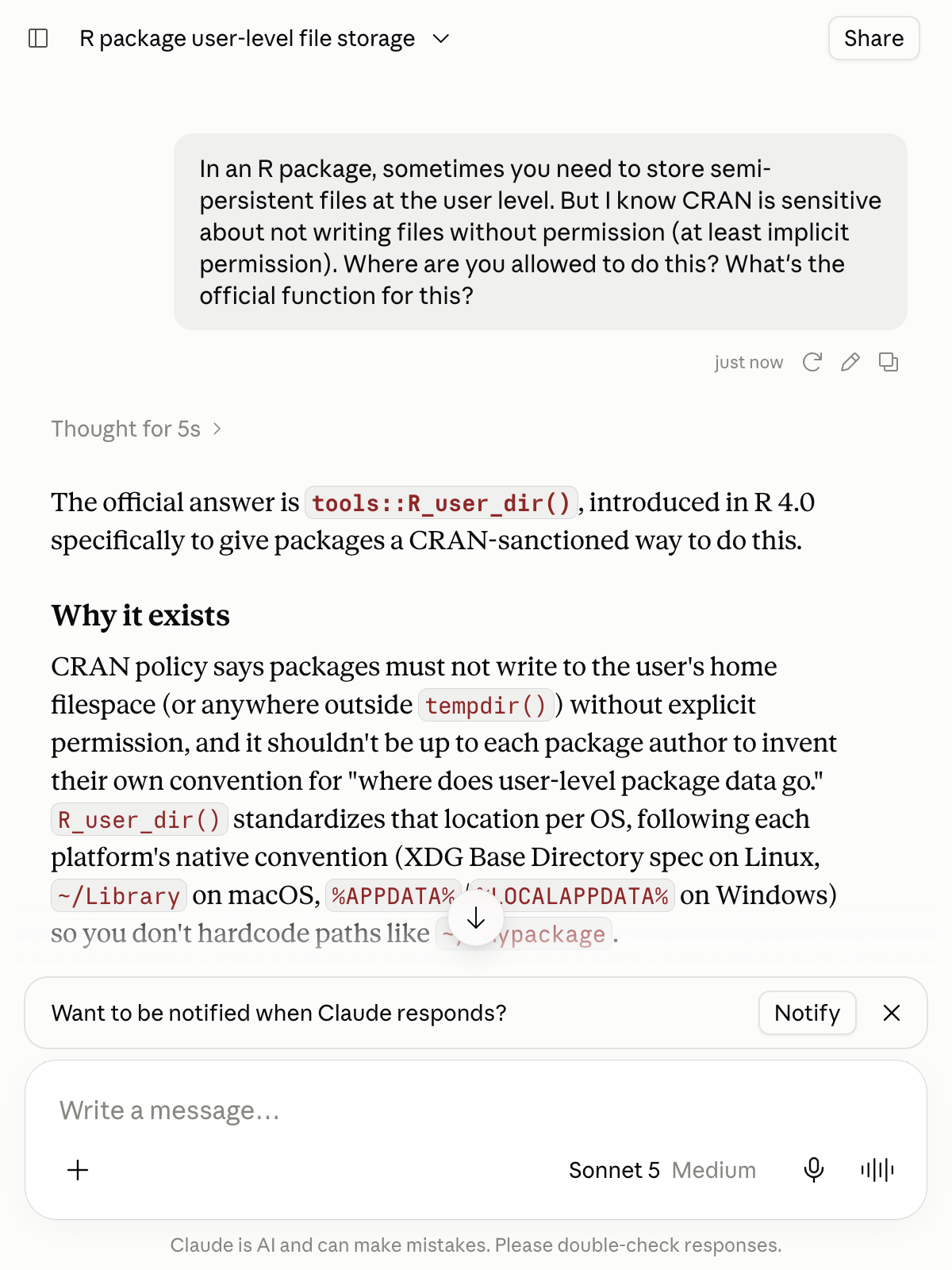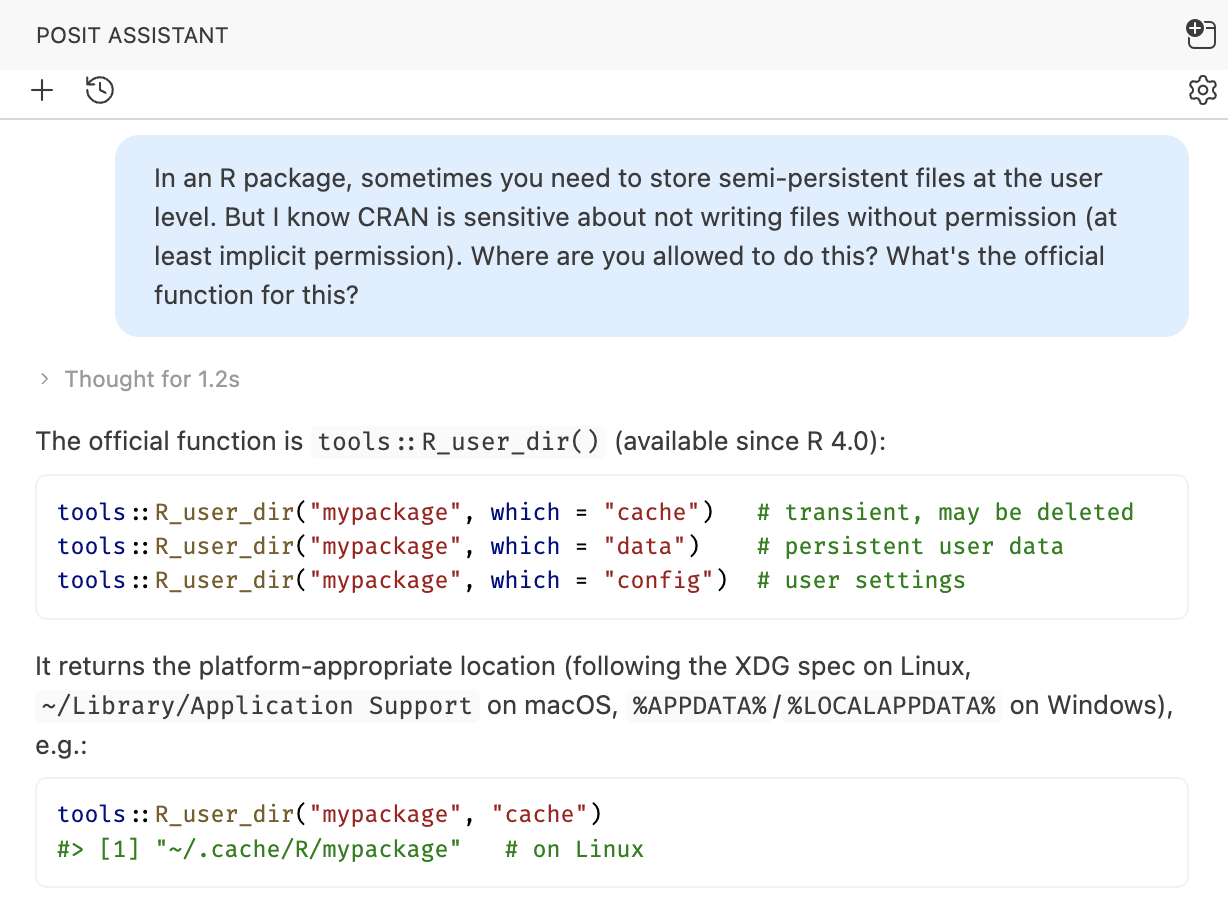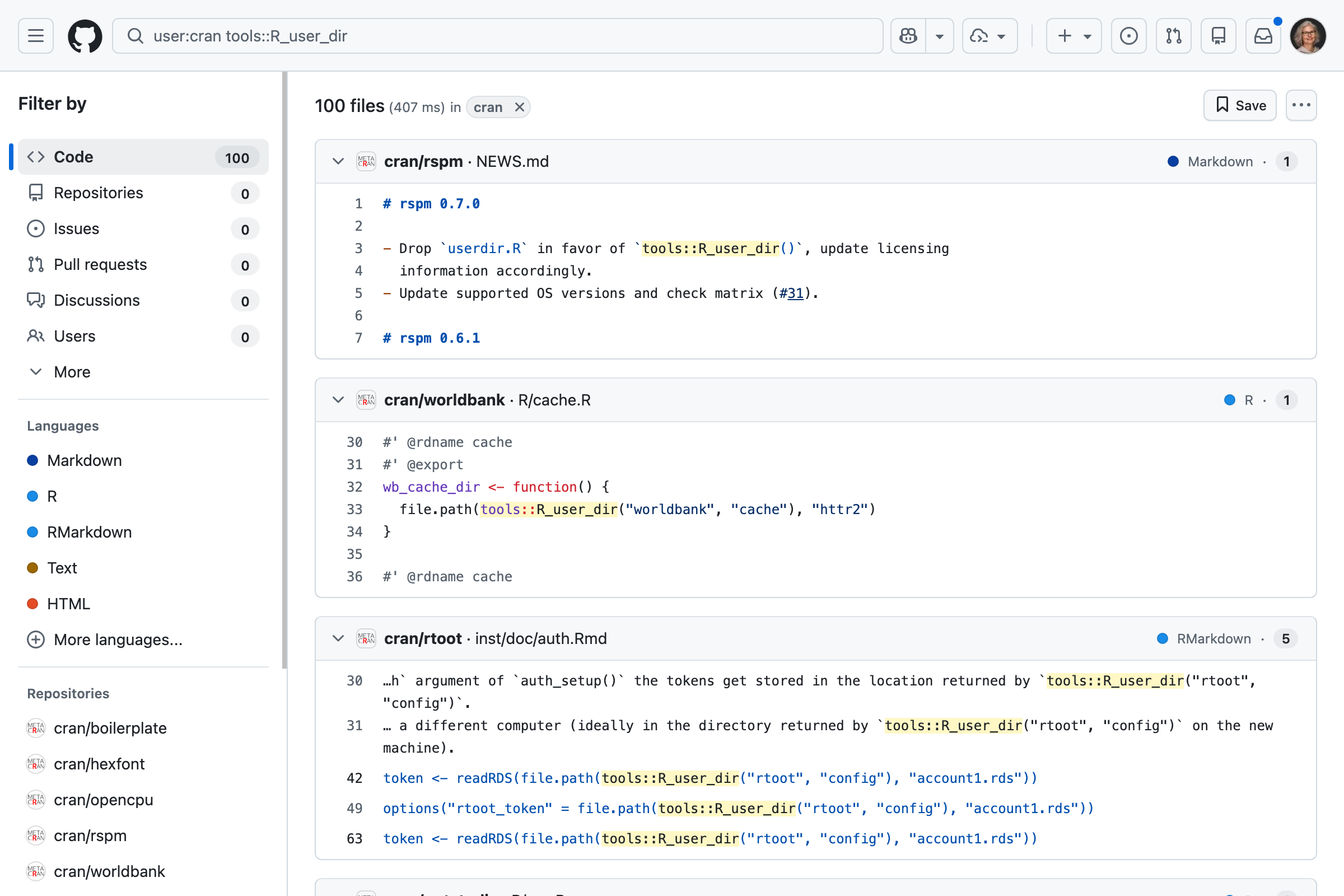
2010s
Let me GitHub search that for you
2020s
Let me ask an LLM for you

2026
Terence Tao discussing a surprising math result with ChatGPT
It is remarkable that the jacobian is constant, that is an exceptional amount of cancellation. Does this polynomial map have any symmetry or other structure that makes this cancelation less miraculous?
What stands out is the shape of the interaction. Tao starts his inquiry by noting a single, precise detail that intrigues him.
Code is the byproduct — yagmin.com
Note what Tao is not doing.
He is not building a rich contextual background for the LLM to unpack. He does not list his credentials or say, “you are a mathematical genius, make no mistakes.”
Instead, he is terse and precise. He asks narrow questions and gets narrow responses.
Keep your requests narrow and specific. Let the output compound through repeated inquiries. Engage with the goal of improving your personal understanding.
Code is the byproduct — yagmin.com


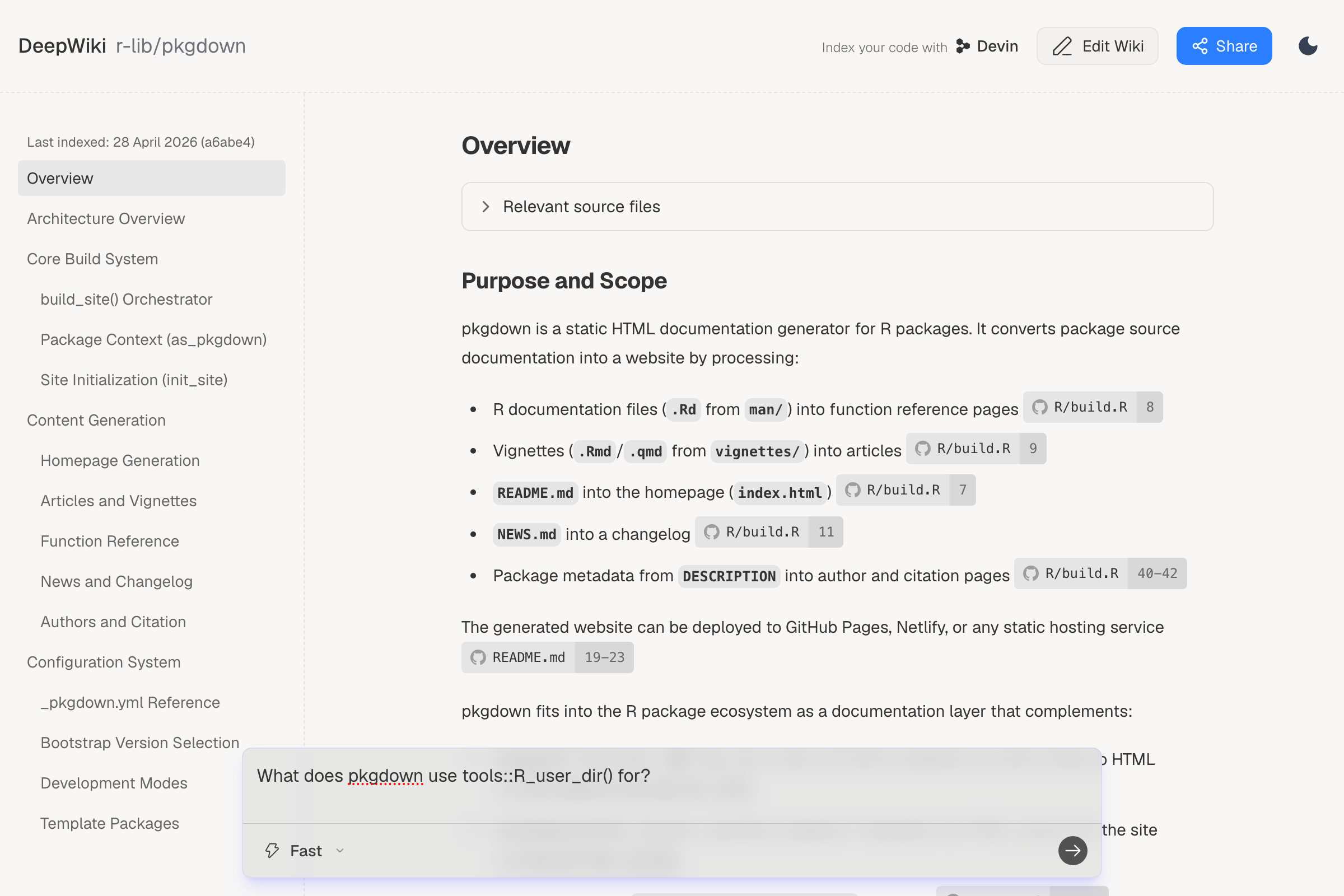
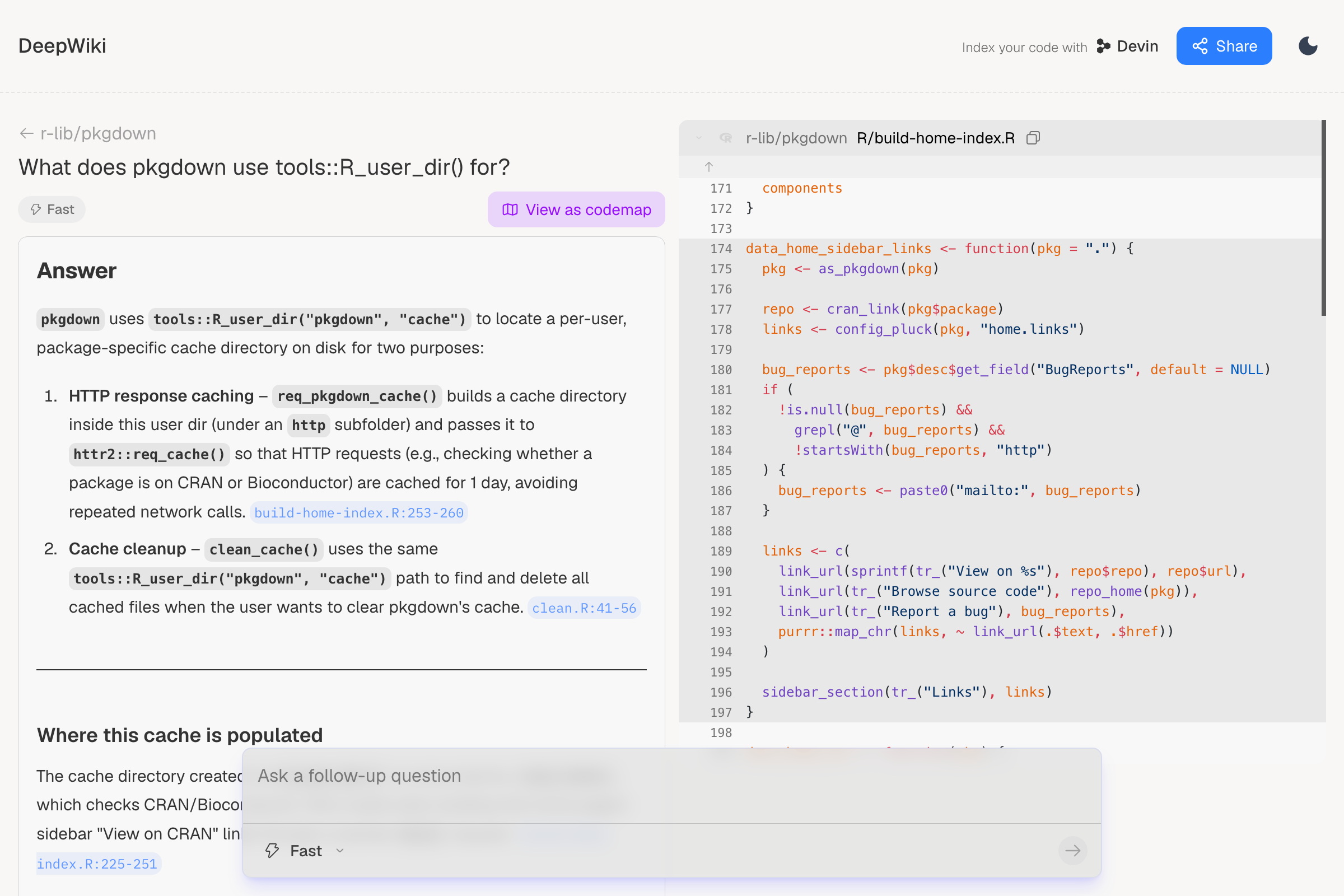
tools::R_user_dir()tools::R_user_dir() for?tools::R_user_dir() for?tools::R_user_dir()?
Visit https://github.com/r-lib/pkgdown and click the Chat with Copilot button
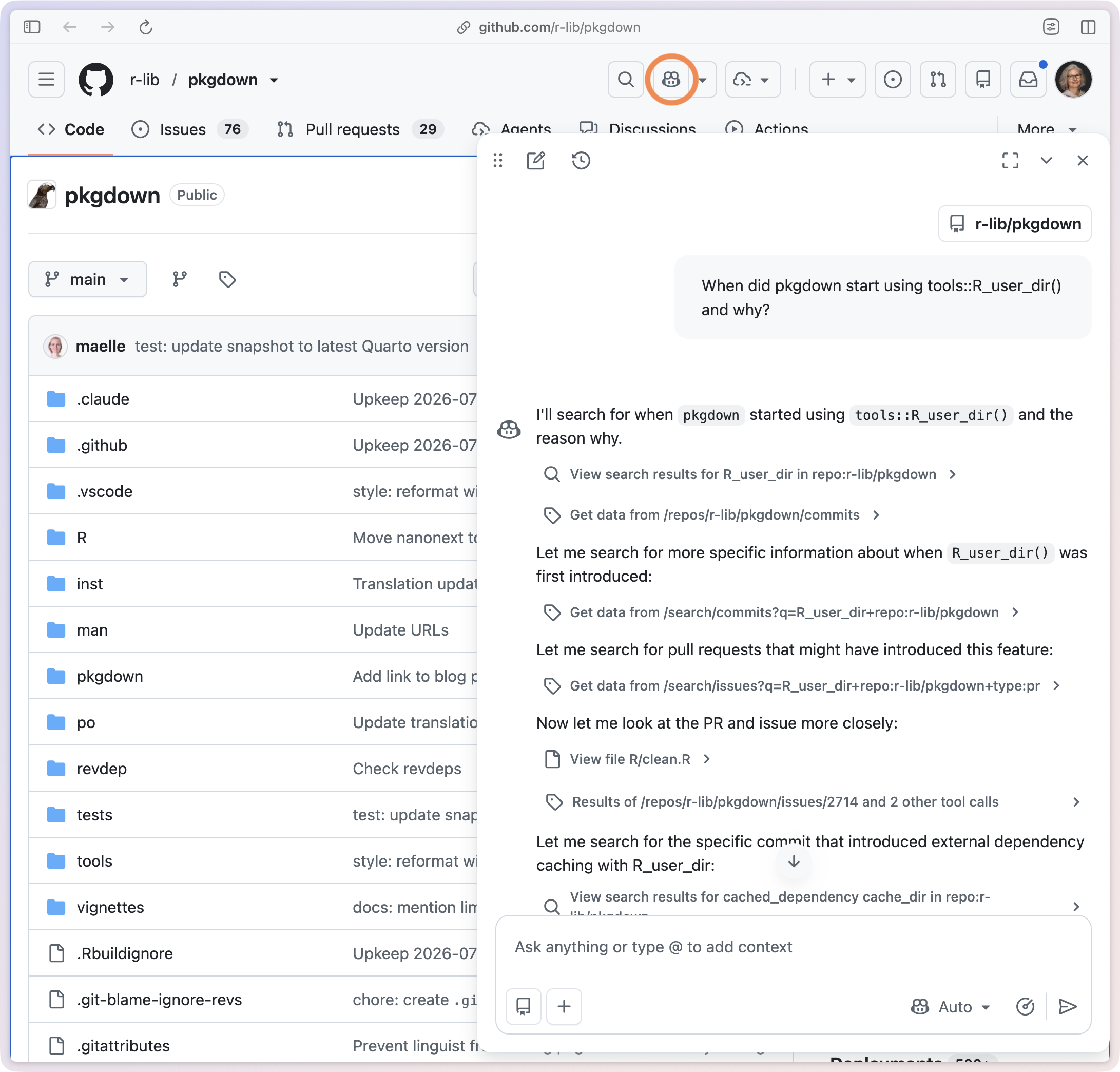
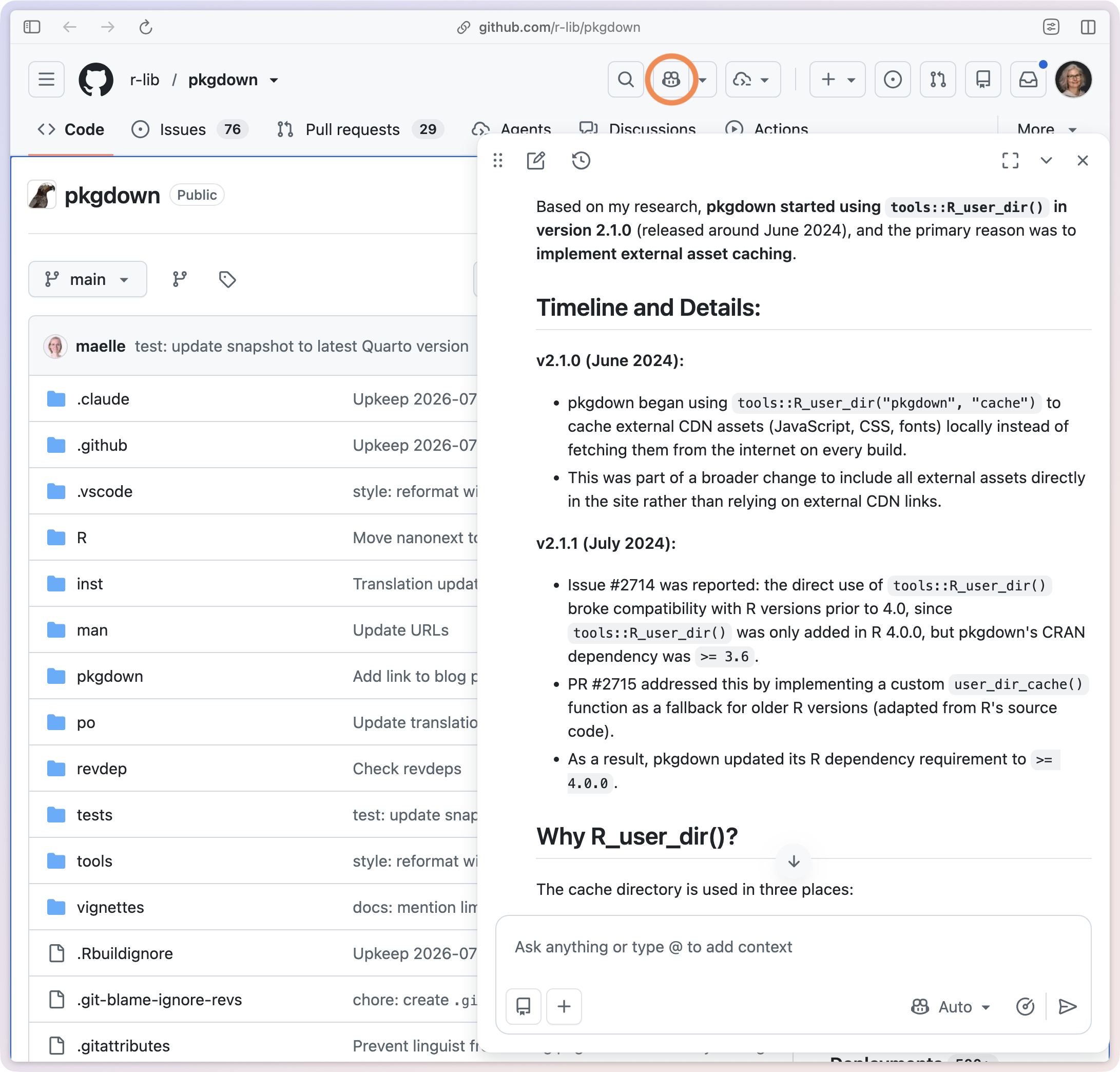
tools::R_user_dir()?
Visit https://github.com/r-lib/pkgdown and click the Chat with Copilot button
tools::R_user_dir() usageOK I’m not actually doing this one, but you could imagine directing an agent to:
tools::R_user_dir() in CRAN packagesuser:cran searches across source of every CRAN packageuser:tidyverse searches within the tidyverse organizationpath:*.yaml search within YAML filesrepo:wch/r-source searches the GitHub mirror of R’s sourcelanguage:R searches R codeHow do you construct shared understanding? By narrowing the LLM’s focus through domain-specific wording and keeping requests specific and cumulative.
Tao pins ChatGPT to a “deep mathematics” headspace through terminology and the specificity of his question.
If you don’t understand something, set the stage for the LLM and it will capably fill in the missing 20%.
Code is the byproduct — yagmin.com